Listing and warehouse item
Map listing variants to warehouse SKUs. For used or unique items, agree a unique item reference and a condition description.
 Speak with sales
Fulfil orders from European stock and match shipment updates to your eBay orders.
Speak with salesMap listing variants to warehouse SKUs. For used or unique items, agree a unique item reference and a condition description.
Align the listing’s handling time with warehouse processing and collection. Test the tracking number, carrier and correct order reference.
Match the return to the eBay order and item. Provide findings and photos where agreed; the seller manages the return case and refund.
Warehouse location and handling are agreed around your products, dimensions, daily volumes and returns. Before inbound delivery, confirm product acceptance, capacity, packaging samples and the inspection report you need.
View the Hagen warehouse →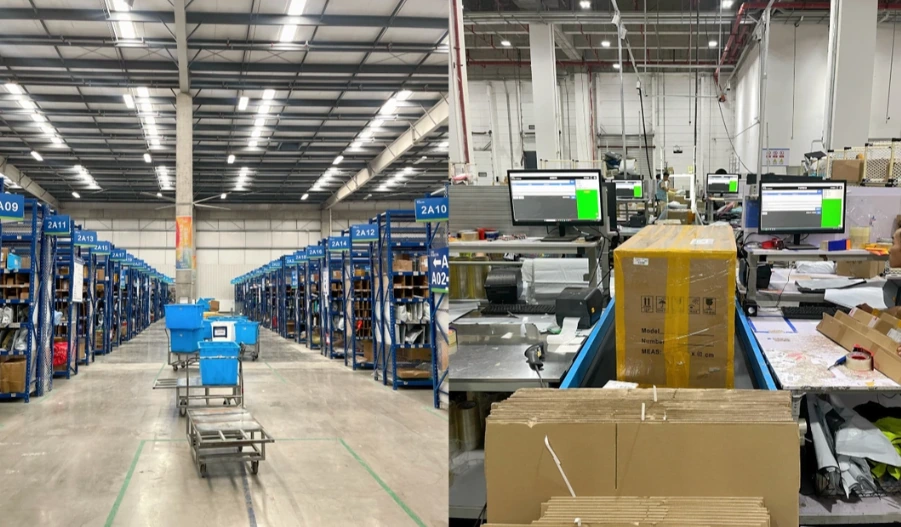
Adapt these proposed checks with your team. Launch readiness requires a recorded test result and a named owner.
Every test line identifies the correct warehouse item, including variants and sets. Evidence: approved SKU mapping.
Receiving, reservation and blocked stock produce the agreed sellable balance. Evidence: before-and-after reconciliation.
An order is processed once. Test cancellation before picking and replay of a handover. Evidence: test log.
Label, quantity, carrier and tracking match the order; test partial shipments where needed. Evidence: sample label and status update.
Match the return and document condition. Uncertain goods remain blocked; resale and refund need separate approval. Evidence: return report.
Missing data or a failed handover produces an alert and a controlled retry. Evidence: failure test with a named owner.
Editable template for test results, evidence and approval.
Download launch checklist (CSV) ↓Record the final allocation of tasks in the agreed service scope.
Maintain the seller account, product data and customer promises; provide account requirements. Own approvals for goods handling, refunds and customer communication.
Plan receiving, storage, picking, packing and return inspection within the agreed scope. Define report fields, exception handling and contacts together.
Name a system owner for data handover and status updates. Agree collection, transport service and transit exceptions with the carrier.
We review your store or ERP, data fields and available handover methods. Connection and scope are confirmed after a documented test.
Receiving times, order cut-off, return reporting and exception handling are agreed for your volume and products. The quote should separate inbound handling, storage, dispatch, returns and additional work.
Platform and market, product dimensions and weights, SKU and variant counts, daily volumes and peaks, returns profile, system, a sample order and a sample label.
eBay’s help explains seller tracking uploads. Carrier selection and data mapping form part of your project test.
Share destination markets, product types, SKU count, monthly volume and peaks, return needs and your existing store or ERP system.